
Significant Progress in the AI-Powered Digital Platform of the easyPEST Project
30.07.2026 11:41
Within the scope of the easyPEST Project, carried out under the coordination of the Governorship of Giresun, a significant stage has been reached in the artificial intelligence-powered digital platform developed for the early detection and monitoring of invasive plant pests.
Co-financed by the European Union under the Interreg NEXT Black Sea Basin Programme, the project is executed under the leadership of the Governorship of Giresun, in partnership with Trabzon University, the Hellenic Agricultural Organization–DIMITRA (Greece), and Ilia State University (Georgia). The project aims to establish a joint system for monitoring and early detection of invasive pest insects and for strengthening cross-border information sharing among relevant institutions in Türkiye, Greece, and Georgia.
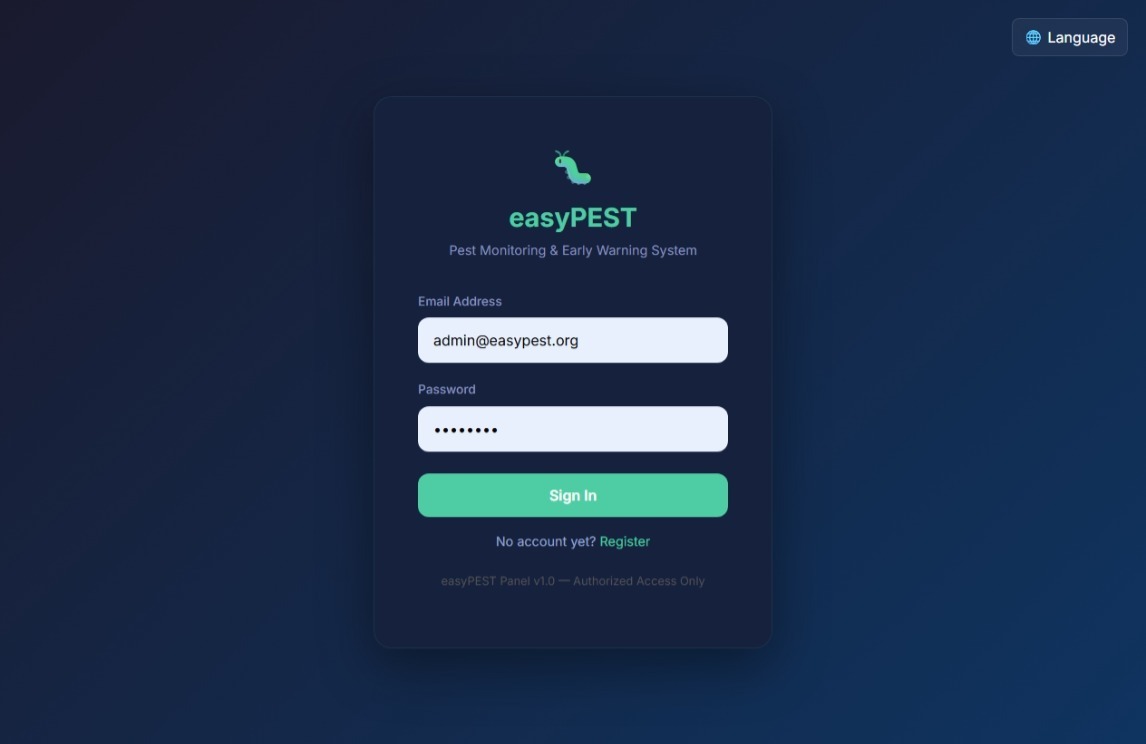
Developed as one of the key outputs of the project, the easyPEST platform was designed to collect and classify images of pest species, train the artificial intelligence model, and track detections on a map. The platform includes modules for training data management, classification by pest species and life stage, statistical analysis, user management, expert evaluation, and geographical monitoring.
To date, 2,565 images belonging to 12 different pest species have been transferred to the database established for training the artificial intelligence model. The images, classified according to different life stages such as egg, larva, nymph, and adult, will be used in AI training to enable higher accuracy in identifying pests.

Through the pest map integrated into the system, detection records can be viewed by location, date, pest species, life stage, and risk level. This will make it possible to track the regional movements of invasive species, generate alerts regarding newly observed pests, and allow experts to evaluate the obtained data rapidly.
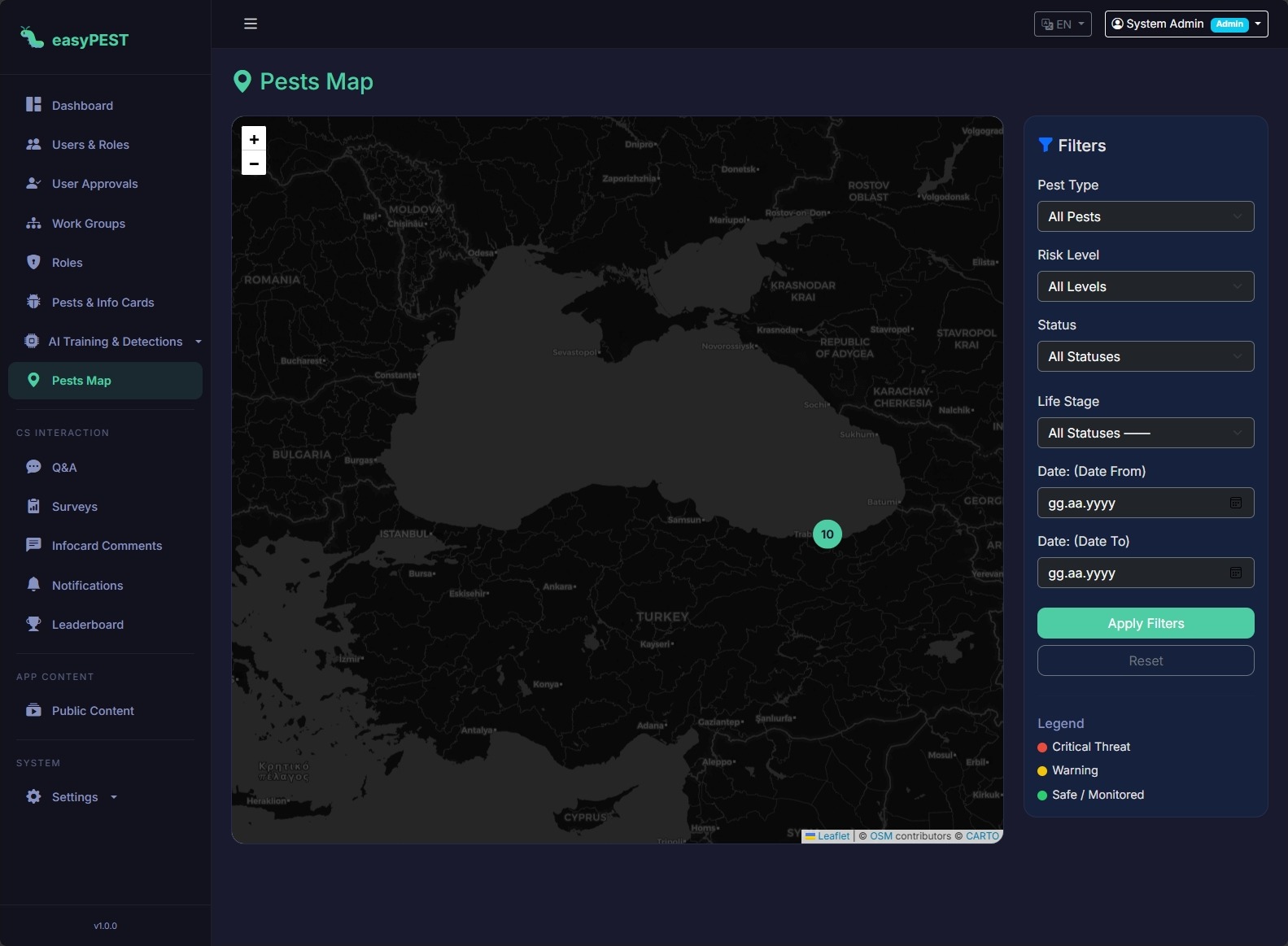
The easyPEST platform is planned to consist of three main components: a mobile application to be used by citizen scientists, a web-based management panel for experts, and an AI-powered insect identification system. Photos of pests taken by citizens will be uploaded to the system, the images will be evaluated by the AI model, and the resulting records will be processed into the database along with location information.
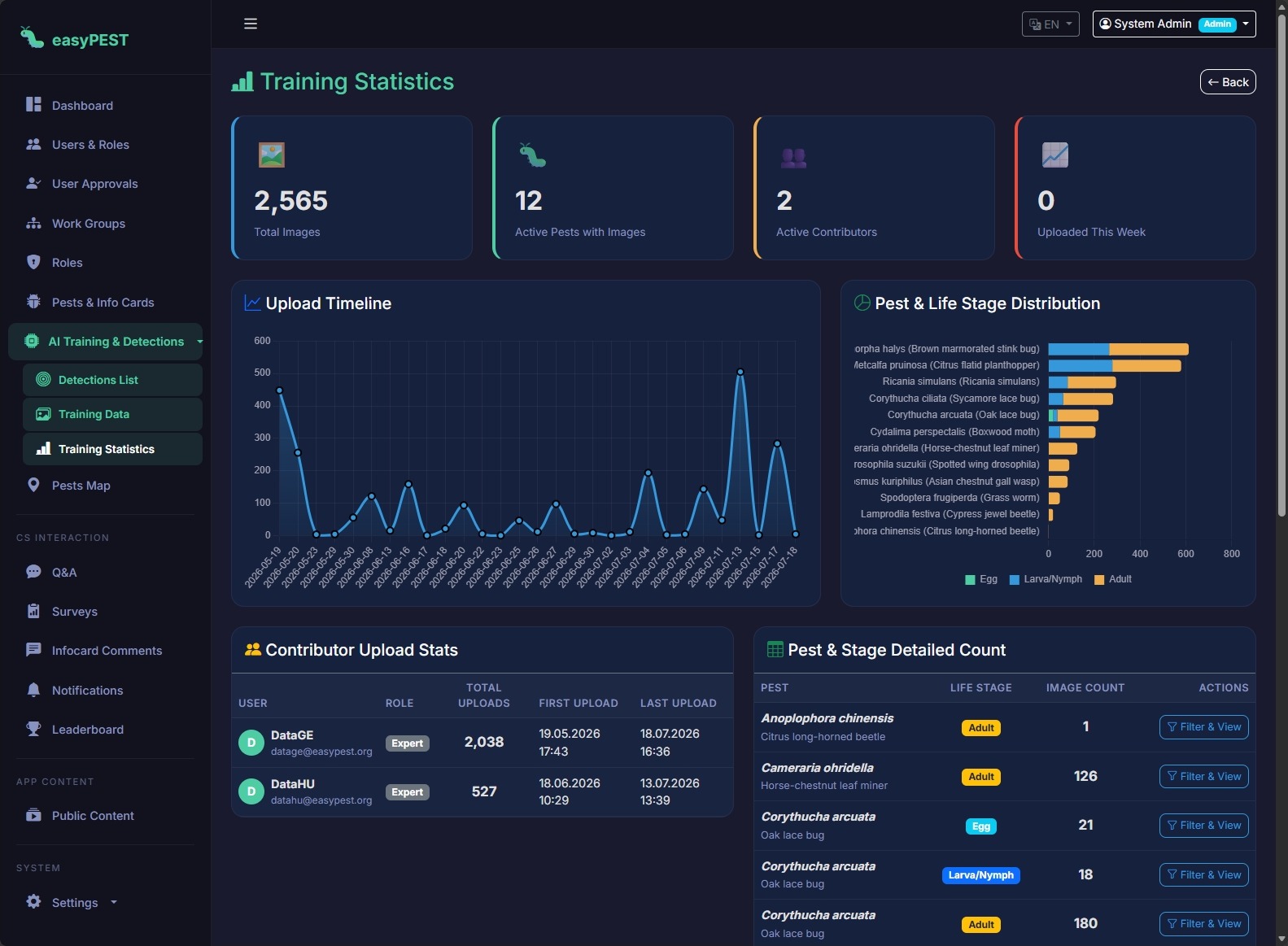
The artificial intelligence library, which will be improved with photos obtained from field studies, aims to contribute to the early detection of invasive pest species identified within the project scope. At the same time, the platform will support direct information sharing among citizen scientists, researchers, and plant protection organizations.
The system, which will be tested through field studies, training programs, and pilot applications in Türkiye, Greece, and Georgia, aims to create a joint monitoring and early warning infrastructure against invasive pests in the Black Sea Basin.